

Table of Contents
- Key Points
- Is Invisalign Cosmetic or Functional?
- How Dental Insurance Typically Covers Invisalign
- When Medical Necessity Comes Into Play
- Braces vs Invisalign: Does Insurance Treat Them Differently?
- Using HSA and FSA Funds for Invisalign
- Financing Invisalign at Wells Family Dental Group
- How Our Team Helps You Make the Most of Your Benefits
- Schedule an Invisalign Consultation With a Dentist in Raleigh, NC
- Frequently Asked Questions
- References
Key Points
- Many dental insurance plans with orthodontic benefits handle Invisalign clear aligners the same way they handle traditional braces.
- Coverage is more likely when treatment corrects a bite or alignment problem that affects oral health, rather than serving a purely cosmetic goal.
- HSA and FSA funds, along with in-house and third-party financing, can help cover whatever portion of treatment insurance does not.
Straighter teeth change the way a smile looks, but for many patients the more important changes happen below the surface. Teeth that crowd, overlap, or come together unevenly can be harder to clean, can wear down faster, and can make chewing less comfortable. That distinction (between treatment that improves appearance and treatment that improves function) also often determines whether dental insurance will help pay for Invisalign.
At Wells Family Dental Group, patients considering clear aligners frequently ask the same question: “Will my insurance cover this?” The answer depends on the plan, but many patients have more coverage available than they expect. Below, we explain how orthodontic benefits typically work, when Invisalign may be considered more than merely cosmetic, and how our financing options can help with any remaining balance.
Is Invisalign Cosmetic or Functional?
Invisalign is a system of custom, removable clear aligners that gradually move teeth into better positions. They are removable and nearly invisible, which means patients can wear them for most of the day, but remove them for eating and brushing. Despite their discreet nature, clear aligners are a powerful orthodontic tool.
Clear aligners are most often used to correct “malocclusion,” the clinical term for a bad bite, or when the upper and lower teeth do not fit together properly. Malocclusion is almost never a purely aesthetic concern, as it is linked to greater incidence of tooth decay, gum disease, abnormal enamel wear, and difficulty chewing. Correcting tooth position can make teeth easier to keep clean and can ease strain on the teeth, jaws, and surrounding muscles.1
Alignment concerns that may affect oral health include:
- Crowding: Overlapping teeth create tight spaces where plaque collects and where a toothbrush and floss have trouble reaching.
- Overbite: When the upper front teeth overlap the lower teeth too much, the teeth can wear unevenly, and the lower teeth may press into the gums behind them.
- Underbite: When the lower teeth sit in front of the upper teeth, the bite can place uneven pressure on the teeth and jaw.
- Gaps and spacing: Spaces between teeth can trap food and, in some cases, allow neighboring teeth to drift out of position.
Not every alignment issue requires treatment, and many cases fall somewhere between purely cosmetic and clearly functional. A thorough exam is the only reliable way to know where your case falls, and it is also the first step in documenting the clinical reasons for treatment if you plan to use your insurance.
How Dental Insurance Typically Covers Invisalign
Most dental insurance plans do not list Invisalign by name. Instead, coverage depends on whether your plan includes an orthodontic benefit. Align Technology, the company that makes Invisalign, notes that many dental plans handle Invisalign the same way they handle traditional braces, though the amount of coverage depends on the plan type and provider.2 If your plan pays toward braces, there is a good chance it will pay toward clear aligners as well.
When you review your benefits summary, a handful of terms will tell you the most about your coverage as it relates to Invisalign treatment. These include:
- Orthodontic benefit: This confirms whether your plan covers orthodontic treatment at all. Some plans exclude it entirely, while others offer it as an optional add-on.
- Lifetime orthodontic maximum: Unlike the annual maximum that applies to cleanings and fillings, orthodontic benefits usually carry a one-time cap. Once that amount is used, it does not reset the following coverage period.
- Coinsurance percentage: Many plans pay a set percentage of the orthodontic fee, up to the lifetime maximum.
- Age limits: Some plans restrict orthodontic coverage to dependents under a certain age, while others extend benefits to adults.
- Waiting periods: Certain plans require you to be enrolled for a set length of time before orthodontic benefits become available.
- Payment schedule: Insurers often pay orthodontic benefits in installments over the course of treatment rather than in a single payment.
Because these details vary widely, even between plans offered by the same carrier, verifying your specific benefits before treatment begins is the most reliable way to avoid surprises.
When Medical Necessity Comes Into Play
For some patients, the question is not simply whether a plan includes orthodontic benefits but whether the insurer considers the treatment medically necessary. 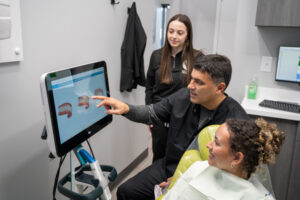 The American Association of Orthodontists describes medically necessary orthodontic care as treatment for a condition that interferes with normal function, causes pain, or creates a physical malformation.3 Cases involving significant bite discrepancies, impacted teeth, or severe crowding are more likely to meet that standard than cases involving minor cosmetic irregularities.
“Medical necessity” carries particular weight for children and teens. Dental coverage is an essential health benefit for children under federal health care law, which means it must be available to families buying health coverage for anyone 18 or younger.4 Depending on a state’s benchmark plan, those required pediatric benefits can include medically necessary orthodontia. Again, the emphasis on “medical necessity” means that orthodontic work done for appearance alone is generally not part of that required coverage.
Documentation helps in either case. When a case has a functional basis, records such as digital scans, X-rays, photographs, and a written diagnosis can support a claim. For instance, at Wells, we use digital scanning during treatment planning, which produces a detailed 3D model of your teeth and bite that you can submit to insurance.
Braces vs Invisalign: Does Insurance Treat Them Differently?
Patients comparing braces vs Invisalign often assume that insurance will favor traditional metal brackets. In many cases, that is not so. Orthodontic benefits are generally tied to correcting the bite rather than to a specific appliance, so a plan that covers braces will frequently apply the same benefit to clear aligners.
That said, policy language matters. Some plans may limit the benefit to what they would pay for conventional braces, while others may treat aligners differently. The total fee for either option also depends on the complexity of the case, so your out-of-pocket cost is best determined through a consultation and a benefits check rather than a general estimate. Clear aligners are generally well suited to mild and moderate concerns, and your exam will confirm whether Invisalign or another approach is best.
Using HSA and FSA Funds for Invisalign
Health savings accounts (HSAs) and flexible spending accounts (FSAs) offer another way to reduce the cost of treatment. IRS Publication 502 lists braces among the dental treatments that count as qualified medical expenses, alongside fillings, extractions, and dentures.5 Clear aligners used to correct tooth alignment are generally treated the same way, though it is wise to confirm eligibility with your plan administrator before you pay.
Pre-tax funds are especially useful for covering the portion of treatment that remains after insurance pays its share, and Wells Family Dental Group accepts HSA and FSA cards. If your FSA follows a calendar-year deadline, unused funds may be forfeited, so the final months of the year can be a great time to schedule a consultation and put those dollars to work.
Financing Invisalign at Wells Family Dental Group
Even with insurance and pre-tax savings, many patients have a remaining balance. We offer several ways to spread that cost over time:
- In-house financing: Qualifying patients can finance up to $1,500 of treatment directly with our practice, with no third-party application required. Our treatment coordinators can explain eligibility and terms.
- CareCredit: This health care credit card offers promotional interest-free periods on qualifying balances and can be used again for future visits and for family members.
- Affirm: Patients choose a payment schedule at checkout and make fixed monthly payments, subject to eligibility.
- Membership Plan: Patients without insurance can join our 100% Inclusive Membership Plan, starting at $32 per month, which covers cleanings, exams, and X-rays and includes 15% off most other treatments. Our team can explain how the plan applies to orthodontic care.
Before treatment begins, we will provide a written estimate showing the full fee, the expected insurance payment, and your out-of-pocket portion. For larger treatment plans, we also work out a payment strategy with you in advance, so you know what to expect before your first set of aligners arrives.
How Our Team Helps You Make the Most of Your Benefits
Insurance questions should not stand between you and a healthier bite. As dentists in Raleigh, North Carolina, who work with patients on a wide range of plans, we take on much of the paperwork for you. Our front desk team will verify your benefits at no cost and with no obligation, and we accept and file claims for most PPO plans, even when we are out of network.
We are in network with a number of major carriers, including:
- MetLife
- Cigna
- Delta Dental Premier
- UnitedHealthcare
- United Concordia Dental
- Blue Cross Blue Shield
- Humana
- Ameritas
- Aetna
- GEHA
Network participation can vary by office and by plan, so we recommend confirming with the location you plan to visit. You can find more details on our Finance and Insurance page.
Schedule an Invisalign Consultation With a Dentist in Raleigh, NC
As an Invisalign Diamond Plus provider, our team offers free clear aligner consultations that include a digital scan and a preview of how your smile may change with treatment. Bring your insurance information to your visit, and we will help you understand what your plan may cover, what your HSA or FSA can contribute, and which financing option fits your budget. Contact us today to schedule a consultation with an Invisalign dentist in Raleigh, NC, and find out how much of your Invisalign treatment your benefits can help cover.
Frequently Asked Questions
Does dental insurance cover Invisalign for adults?
It can, but not every plan extends orthodontic benefits to adults. Some plans limit orthodontic coverage to dependents under a certain age, while others cover patients of any age. Checking your plan’s age limits is one of the first steps in a benefits verification.
Can I use my HSA or FSA to pay for Invisalign?
In most cases, yes. Orthodontic treatment that corrects tooth alignment generally qualifies as an eligible dental expense, and we accept HSA and FSA cards. If you have questions about documentation, your plan administrator can tell you what records to keep.
What if my dental insurance does not include orthodontic coverage?
You still have options. Patients without orthodontic benefits can use HSA or FSA funds, in-house financing, or CareCredit, to make treatment more manageable. Our team can walk you through each option during your consultation.
How can I find out what my plan covers before I commit?
Ask our front desk to verify your benefits. As dentists in Raleigh, NC, we check orthodontic coverage, lifetime maximums, and age limits, at no cost. And we provide a written estimate before treatment begins.
References
- Liliana Szyszka-Sommerfeld, Monika Machoy-Rakoczy, Alla Belova, et al., “The Relationship Between Malocclusion and Periodontal Health in Children and Adolescents: A Systematic Review and Meta-Analysis,” Journal of Clinical Medicine, February 2026, https://pmc.ncbi.nlm.nih.gov/articles/PMC12898605/.
- “Does Insurance Cover Invisalign Aligners?” Align Technology, July 2024, https://www.invisalign.com/resources/insurance/does-insurance-cover-invisalign.
- “Medically Necessary Orthodontic Care,” American Association of Orthodontists, retrieved on October 29, 2026, from: https://www2.aaoinfo.org/practice-management/patient-management/medically-necessary-orthodontic-care/.
- “Dental Coverage in the Health Insurance Marketplace,” HealthCare.gov, retrieved on October 29, 2026, from: https://www.healthcare.gov/coverage/dental-coverage/.
- “About Publication 502, Medical and Dental Expenses,” U.S. Internal Revenue Service, March 2026, https://www.irs.gov/forms-pubs/about-publication-502.

Dr. Brett Wells is the founder of Loren Dental, DentalHQ.com, and Wells Family Dental Group, which was recently awarded the Triangle Business Journal’s “2024 Best Places to Work” recognition. Dr. Wells has more than 20 years of experience practicing general and family dentistry, and has published widely in major medical journals, like Dental Economics and Inside Dentistry, on topics ranging from navigating dental insurance to advice for other dental practices and the impact of PPOs on dentistry. He is a graduate of the University of North Carolina-Chapel Hill Adams School of Dentistry and maintains memberships in various professional associations, including the American Dental Association, the Academy of General Dentistry, and the Dentist Entrepreneur Organization.
