

Table of Contents
- Key Points
- What Is Invisalign and How Does It Work?
- Braces vs Invisalign: Understanding Your Options
- Who Is a Candidate for Invisalign?
- What to Expect During Invisalign Treatment
- The Importance of Choosing the Right Invisalign Provider
- Cost and Insurance Considerations
- Learn More About Invisalign Treatments
- Frequently Asked Questions
- References
Key Points
- For patients seeking orthodontic correction without metal brackets and wires, Invisalign offers a discreet, removable alternative to traditional braces.
- Understanding the differences between braces vs Invisalign can help patients and families make a confident, informed decision about their smile journey.
- Wells Family Dental provides personalized Invisalign consultations to determine candidacy and develop customized treatment plans for teens and adults in Morrisville and throughout the Raleigh metropolitan area.
Orthodontic treatment has evolved significantly over the past few decades, and one of the most notable advancements in the field is the development of clear aligner therapy.1 For patients who want straighter teeth without the look and feel of traditional metal brackets, Invisalign has become a leading solution trusted by dental professionals and patients alike.
At Wells Family Dental in Raleigh, NC, our team helps patients explore their orthodontic options with clarity and confidence. Whether you are an adult professional, a college student, or the parent of a teenager considering treatment, this guide covers what you need to know about Invisalign, how it compares to conventional braces, and what the treatment process involves from start to finish.
What Is Invisalign and How Does It Work?
Invisalign is a clear aligner system that gradually shifts teeth into their desired positions using a series of custom-fabricated, removable trays. Each set of aligners is worn for approximately one to two weeks before the patient advances to the next set in the sequence. Over the course of treatment—which typically ranges from six to eighteen months, depending on the complexity of the case—the aligners apply gentle and controlled force to guide teeth into alignment.2
The process begins with a comprehensive digital scan of the patient’s teeth. This allows the dental team to create a precise, three-dimensional treatment plan that maps the projected movement of each tooth throughout every stage of treatment. Patients can often preview their anticipated results before treatment even begins, which provides both motivation and a clear understanding of the timeline ahead.
Braces vs Invisalign: Understanding Your Options
One of the most common questions patients ask is whether they should choose braces or Invisalign. Both options are effective orthodontic treatments, but they differ in several meaningful ways. Understanding these differences can help patients select the approach that best fits their clinical needs, lifestyle, and personal preferences.
When comparing braces vs Invisalign, consider the following factors: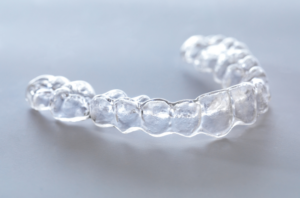
- Aesthetics: Traditional metal braces are visible on the teeth throughout treatment. Invisalign aligners are made from a clear, medical-grade thermoplastic material that is virtually invisible when worn, making them a popular choice for adults and image-conscious teens.
- Removability: Braces are fixed appliances that remain bonded to the teeth for the duration of treatment. Invisalign trays are removable, which allows patients to take them out while eating, drinking, brushing, and flossing.
- Comfort: While all orthodontic treatment involves some degree of pressure as teeth shift, many patients find that Invisalign aligners produce less irritation to the soft tissues of the mouth compared to the brackets and wires associated with traditional braces.
- Dietary restrictions: Patients with traditional braces must avoid certain foods that can damage brackets or become trapped in wires, such as hard candy, popcorn, and sticky foods. Because Invisalign trays are removed during meals, there are no dietary restrictions during treatment.
- Oral hygiene: Maintaining oral hygiene with braces requires careful brushing around brackets and the use of specialized floss threaders. With Invisalign, patients simply remove their aligners and brush and floss as they normally would, which supports better overall dental health throughout the treatment period.
- Treatment complexity: Traditional braces may be recommended for more severe orthodontic issues, including significant bite misalignment or complex tooth rotation. Invisalign has expanded its capabilities considerably in recent years, but there are still some cases where conventional braces may be the more clinically appropriate option.
The decision between braces or Invisalign is ultimately one that should be made in consultation with a qualified dental provider who can evaluate the specific clinical circumstances of each patient. At Wells Family Dental, we take the time to discuss both options thoroughly so that patients feel empowered in their decision-making process.
Who Is a Candidate for Invisalign?
Invisalign is designed to address a wide range of orthodontic concerns. Common conditions that can be treated with clear aligners include:
- Crowded teeth
- Gaps between teeth
- Overbite, underbite, and crossbite
- Open bite
- General misalignment and mild to moderate malocclusion
Both adults and teens may be candidates for Invisalign, though candidacy depends on the nature and severity of the orthodontic issue. Teens who are still awaiting the eruption of certain permanent teeth may require a modified approach, and younger children with developing dentition are generally better served by other orthodontic interventions. Wells Family Dental provides age-appropriate guidance for every member of the household, including referrals to specialists when indicated.
During the initial consultation, the dental team will conduct a thorough examination, review digital imaging, and discuss the patient’s goals before making a recommendation. This individualized approach ensures that each patient receives the treatment best suited to their unique oral health profile.
What to Expect During Invisalign Treatment
Patients who move forward with Invisalign at Wells Family Dental can expect a structured and well-supported treatment experience. The general timeline includes the following stages:
- Consultation and digital scanning: The initial appointment involves a comprehensive oral evaluation and a digital scan of the teeth. This scan replaces the need for traditional dental impressions and provides the data needed to design the treatment plan.
- Custom aligner fabrication: Based on the digital scan, a series of custom aligners is fabricated specifically for the patient. Each aligner is designed to make incremental adjustments to tooth positioning.
- Wearing the aligner: Patients are instructed to wear their aligners for 20 to 22 hours per day, removing them only for eating, drinking anything other than water, and oral hygiene routines. Compliance with wear time is one of the most important factors in achieving optimal results.
- Progress check-ins: Patients return to the office periodically (typically every six to eight weeks) so the dental team can monitor progress, ensure the teeth are tracking according to plan, and provide the next set of aligners.
- Completion and retention: Once the final set of aligners has been worn and the teeth have reached their target positions, the patient transitions to a retainer. Retainers are essential for maintaining the results of any orthodontic treatment, and the dental team will provide detailed guidance on retainer wear and care.
The Importance of Choosing the Right Invisalign Provider
Orthodontic treatment is a significant investment in both time and resources, and choosing the right provider matters. Patients in the Morrisville and greater Raleigh area benefit from working with a practice that combines clinical expertise with a patient-centered philosophy.
Choosing a provider who is experienced with Invisalign and who invests in continuing education and advanced technology ensures that patients receive care that reflects current best practices in the field. At our dental practice, we are committed to that standard, which is why we have built a reputation for delivering high-quality care in a comfortable and welcoming environment.
Cost and Insurance Considerations
The cost of Invisalign treatment varies depending on the complexity and duration of the case. In many instances, the cost of Invisalign is comparable to that of traditional braces.
Many dental insurance plans that include orthodontic benefits will cover a portion of Invisalign treatment, just as they would for braces. Our administrative team works with patients to verify insurance benefits, explain coverage details, and discuss flexible payment options that make treatment accessible.
Learn More About Invisalign Treatments
Deciding to pursue orthodontic treatment is a meaningful commitment to your long-term oral health. Properly aligned teeth are easier to clean, less susceptible to uneven wear, and better positioned to support healthy jaw function over the course of a lifetime. Investing in orthodontic treatment today can reduce the likelihood of more complex dental concerns in the years ahead, making it a decision that pays dividends well beyond the mirror.
At Wells Family Dental, we believe that every patient deserves a treatment experience built on transparency, clinical excellence, and genuine personal attention. Our team takes the time to answer your questions, walk you through the details of your treatment plan, and ensure that you feel fully supported at every stage of the process.
As a dentist Morrisville families have come to rely on, we are proud to offer Invisalign as part of a comprehensive approach to care that serves patients of all ages. Contact one of our many Raleigh locations today to schedule an appointment. A straighter, healthier smile may be closer than you think.
Frequently Asked Questions About Invisalign
How long does Invisalign treatment take?
Treatment duration varies by case, but most patients complete their Invisalign treatment within six to eighteen months. Mild cases may require less time, while more complex orthodontic concerns may extend the timeline. Your dentist will provide a projected treatment length during the consultation.
Does Invisalign hurt?
Patients may experience mild pressure or discomfort when they switch to a new set of aligners, which is a normal indication that the teeth are moving. This sensation typically subsides within a day or two and is generally considered less uncomfortable than the adjustments associated with traditional braces.
Can I eat and drink with my aligners in?
Patients should remove their Invisalign aligners before eating or drinking anything other than plain water. Consuming food or colored beverages while wearing aligners can cause staining or damage to the trays. Note that one of the biggest advantages of Invisalign vs. braces is that there are no restrictions on the types of foods you can consume.
How do I keep my aligners clean?
Aligners should be rinsed with lukewarm water and gently brushed with a soft-bristle toothbrush each time they are removed. Avoid using very hot water, as heat can warp the thermoplastic material. The Invisalign cleaning system is also available for patients who prefer a dedicated cleaning solution.
Is Invisalign appropriate for teenagers?
Yes, Invisalign Teen is specifically designed for adolescent patients and includes features such as compliance indicators that help parents and dentists monitor wear time. However, candidacy depends on the teen’s specific orthodontic needs and their ability to carry out the recommended wear schedule.
References
- AbdulMajeed AlMogbel, “Clear Aligner Therapy: Up to date review article,” Journal of Orthodontic Science, September 2023, https://pmc.ncbi.nlm.nih.gov/articles/PMC10597356/.
- “How Invisalign Treatment Works,” Invisalign.com, retrieved on May 11, 20226, from: https://www.invisalign.com/how-it-works.

Dr. Brett Wells is the founder of Loren Dental, DentalHQ.com, and Wells Family Dental Group, which was recently awarded the Triangle Business Journal’s “2024 Best Places to Work” recognition. Dr. Wells has more than 20 years of experience practicing general and family dentistry, and has published widely in major medical journals, like Dental Economics and Inside Dentistry, on topics ranging from navigating dental insurance to advice for other dental practices and the impact of PPOs on dentistry. He is a graduate of the University of North Carolina-Chapel Hill Adams School of Dentistry and maintains memberships in various professional associations, including the American Dental Association, the Academy of General Dentistry, and the Dentist Entrepreneur Organization.
