
Table of Contents
- Key Points
- Why Lunch Matters More Than Many Parents Know
- Build the Lunch Around Five Components
- Foods Worth Limiting
- Timing, Packaging, and the Afternoon Snack
- Special Considerations for Braces and Recent Dental Work
- When Diet Is Not the Whole Answer
- Schedule Your Child’s Next Visit
- Frequently Asked Questions
- References
Key Points
- Small substitutions, rather than a complete overhaul of the lunchbox, produce the most durable results for both nutrition and oral health.
- What a child eats at lunch matters, but how often and how long those foods stay on the teeth matters just as much.
- A tooth-friendly lunch is built from five simple components: protein, calcium, crunchy produce, whole grains, and water.
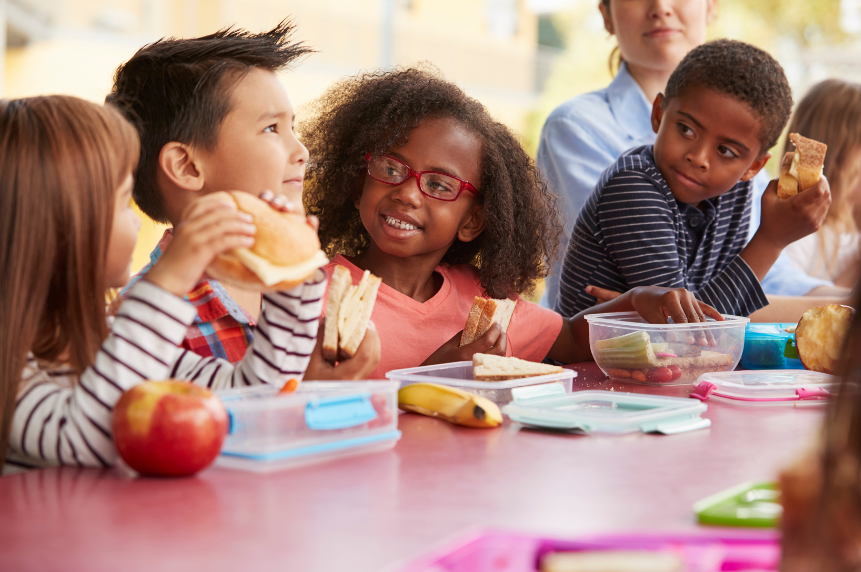
Every school year, parents face the same recurring challenge: five lunches a week, roughly forty weeks a year, packed before 7:00 a.m. in the morning, and eaten in twenty rushed minutes at a cafeteria table. The nutritional stakes are well understood. The dental stakes are less obvious, though they are considerable, as cavities remain the most common chronic disease (in both children and adults) in the United States—most children have had at least one cavity in a baby tooth by the early elementary years.1
The encouraging part is that tooth decay is largely preventable, and the lunchbox is one of the few places where a parent still exercises nearly complete control. As a Raleigh dentist office that has treated several generations of local families, Wells Family Dental spends a great deal of time on this subject, and the conversation is almost never about eliminating treats. It is about structure, timing, and a handful of practical substitutions.
Why Lunch Matters More Than Many Parents Know
Tooth decay is not caused by sugar (directly). It is caused by acid. The bacteria that live in dental plaque metabolize the sugars and refined starches left behind after a meal and release acid as a byproduct.2
That acid softens and dissolves the mineral surface of the enamel in a process clinicians call “demineralization.” Saliva then goes to work neutralizing the acid and redepositing minerals, but the recovery takes roughly twenty to thirty minutes after the last bite.
This is why the pattern of eating matters as much as the menu. A cookie eaten at the end of lunch produces one acid cycle. The same cookie broken into pieces and nibbled across an afternoon produces several. And a juice box sipped slowly through a straw over the course of an hour keeps the teeth in an acidic environment far longer than the same juice consumed in five minutes (sugary drinks are particularly harmful because slow sipping continuously bathes the teeth in sugar3).
Build the Lunch Around Five Components
Rather than evaluating each item individually, it helps to think of the lunchbox as a structure with five slots. Fill all five and the nutritional and dental math generally takes care of itself.
- Protein: Lean meats, poultry, eggs, tuna, beans, hummus, nut butters, and seeds supply phosphorus, a mineral that works alongside calcium to maintain enamel.4 Protein also slows digestion and keeps children satisfied through the afternoon, which reduces the after-school grazing that drives so much decay.
- Calcium and dairy: Cheese sticks, plain yogurt, and milk are among the most useful foods a parent can pack. Cheese in particular helps counter the effects of acid attacks, and dairy foods deliver calcium and casein proteins that support remineralization.5 Plain yogurt is preferable to flavored varieties, which frequently carry as much added sugar as a dessert.
- Crunchy fruits and vegetables: Apples, pears, carrots, celery, cucumber, bell pepper strips, and snap peas have high water content and a fibrous texture that stimulates saliva flow and mechanically wipes the tooth surfaces during chewing. They are not a substitute for brushing, but they can make their own positive impact.
- Whole grains: Whole grain bread, crackers, brown rice, and oats break down more slowly than refined white flour products, which tend to turn pasty and lodge in the grooves of the molars. Whole grains also provide B vitamins and iron that support healthy gum tissue.
- Water: Plain water—ideally fluoridated tap water—rinses away food debris and dilutes acid. Raleigh’s municipal water supply is fluoridated, which means the most protective beverage a parent can pack is also the least expensive one.6
Foods Worth Limiting
No food needs to be forbidden, but several categories deserve to be occasional rather than routine. The common thread among them is not sweetness alone, but persistence—meaning how long the food clings to the teeth after the meal ends.
- Sticky candies and chewy fruit snacks: Gummies, fruit leather, taffy, and caramels adhere to the enamel and settle into the pits and fissures of the back teeth, where they can remain for hours. Fruit snacks marketed as containing real fruit juice behave the same way as candy from the perspective of the bacteria.
- Dried fruit: Raisins, dried cranberries, and dried mango are nutritionally reasonable but—from a dental health perspective—are sticky. If they go in the lunchbox, pair them with cheese or nuts, and encourage your child to chase them with water.
- Crackers, chips, and pretzels: Refined starches convert to simple sugars quickly in the mouth. Goldfish crackers and potato chips are frequently assumed to be the safe alternative to cookies, and from a dental standpoint, they are not much different.
- Juice and sports drinks: From an overall health perspective, choose 100 percent juice. Just know that these can be high in natural sugar as well. Sports drinks add acidity to the equation and are unnecessary for a child who is not engaged in prolonged, intense exercise.
- Sodas and sweetened teas: These combine sugar with phosphoric or citric acid, a combination that erodes enamel independent of any bacterial activity.
Timing, Packaging, and the Afternoon Snack
A well-designed lunch can be undone by what follows it. A few basic habits can help protect the work already done:
- Keep sweets inside the meal: If a treat is going in, it belongs alongside the sandwich rather than in a separate container for later.
- Discourage all-afternoon grazing: Continuous snacking from a divided container extends acid exposure across hours rather than minutes.
- Consider sugar-free gum for older children: Where school policy permits, chewing sugar-free gum after lunch stimulates saliva and helps clear debris. Products carrying the ADA seal of approval have been evaluated for this purpose.7
- Reinforce brushing at home: Twice daily brushing with fluoride toothpaste and daily cleaning between the teeth remain the foundation. Lunch choices support that routine—they do not replace it.
Special Considerations for Braces and Recent Dental Work
Children in orthodontic treatment need a modified list. Hard, sticky, and chewy foods can break brackets and bend wires, and any food that requires biting directly into it presents a risk. Whole apples, carrots, and corn on the cob are manageable when sliced, chopped, or cut from the cob before packing. Nuts, hard candies, ice, and popcorn are best left out entirely during treatment.
Likewise, children recovering from an extraction, a pulpotomy, or a stainless steel crown placement generally need soft foods for a short period. Yogurt, scrambled eggs, soft pasta, and smoothies consumed with a spoon (rather than a straw) are good choices. Among reputable dental offices in Raleigh this kind of post-treatment instruction should be standard.
When Diet Is Not the Whole Answer
 Nutrition is one variable among several. Genetics, enamel structure, saliva composition, fluoride exposure, brushing technique, and the timing of the first dental visit all contribute to oral health (or lack thereof). A child who eats a well-rounded lunch and still develops cavities is not a failure of parenting; that child may simply need sealants, fluoride varnish, or more frequent recall visits.
That is where a professional relationship matters. Selecting a dental clinic in Raleigh for your family is less about finding the best dentist in some abstract sense and more about identifying a practice that will track your child’s individual risk over time and adjust the preventive plan accordingly.
Parents should also know where to turn when something goes wrong outside of a routine appointment. A chipped tooth on the playground, a knocked-out permanent tooth, or sudden significant pain warrants prompt attention from an emergency dentist in Raleigh, rather than a wait-and-see approach.
Schedule Your Child’s Next Visit
Wells Family Dental has served families throughout Raleigh, Morrisville, Pittsboro, and the surrounding communities for years, and our team treats children and adults under the same roof, which spares parents the logistics of coordinating separate appointments across town. If you have been meaning to establish care with a pediatric dentist in Raleigh, or you are simply due for a checkup, we would be glad to see you.
We can also discuss with you the best healthy lunch options and habits that can help optimize your child’s smile and their overall health. Contact Wells Family Dental to schedule an appointment.
Frequently Asked Questions
Are fruit snacks better for teeth than candy?
Not really. Both are sticky, both are high in sugar, and both cling to the chewing surfaces of the molars long after the meal ends. For these reasons, fresh fruit is the better substitution.
Is 100 percent juice safe to pack?
It is nutritionally superior to a sugar-sweetened drink, but it is still high in sugar and acid. Pediatric dentists will recommend daily limits that vary by age, but generally no more than four to six ounces for younger children and eight ounces for older children and teens. Water remains the better everyday choice for a lunchbox.
Does my child need to brush after lunch at school?
It is beneficial but rarely practical. Rinsing with water after eating and chewing sugar-free gum (where permitted) can both help. Thorough brushing twice a day at home with fluoride toothpaste is the priority.
My child eats well and still gets cavities. Why?
Diet is only one of many risk factors. Enamel quality, saliva flow, tooth anatomy, fluoride exposure, and brushing technique all play a role, and some children are simply more susceptible. Sealants and professional fluoride treatments are often appropriate in these cases.
What should I pack for a child with braces?
Soft proteins, sliced or chopped produce, yogurt, cheese, and soft whole grain breads work well. Avoid nuts, hard candy, popcorn, ice, and anything the adolescent would need to bite into whole. Cutting food into bite-sized pieces before packing solves most of the problem.
References
- “Dental Caries (Tooth Decay),” National Institute of Dental and Craniofacial Research, National Institutes of Health, June 2026, https://www.nidcr.nih.gov/research/data-statistics/dental-caries.
- “Overview: Tooth decay,” National Center for Biotechnology Information, National Library of Medicine, September 2023, https://www.ncbi.nlm.nih.gov/books/NBK279514/.
- “Diet and Dental Health,” American Dental Association, January 2026, https://www.mouthhealthy.org/all-topics-a-z/diet-and-dental-health.
- Hualei Zhao, Qun Zhang, and Jinpu Chu, “Effect of phosphate group on remineralization of early enamel caries regulated by amelogenin peptide,” PLoS One, May 2024, https://pmc.ncbi.nlm.nih.gov/articles/PMC11108222/.
- “Dairy: Health food or health risk?” Harvard Health Publishing, Harvard University, January 2019, https://www.health.harvard.edu/blog/dairy-health-food-or-health-risk-2019012515849.
- “Fluoridation,” RaleighNC.gov, April 2026, https://raleighnc.gov/water-and-sewer/services/fluoridation.
- “Chewing Gum,” American Dental Association, May 2023, https://www.ada.org/resources/ada-library/oral-health-topics/chewing-gum.

Dr. Brett Wells is the founder of Loren Dental, DentalHQ.com, and Wells Family Dental Group, which was recently awarded the Triangle Business Journal’s “2024 Best Places to Work” recognition. Dr. Wells has more than 20 years of experience practicing general and family dentistry, and has published widely in major medical journals, like Dental Economics and Inside Dentistry, on topics ranging from navigating dental insurance to advice for other dental practices and the impact of PPOs on dentistry. He is a graduate of the University of North Carolina-Chapel Hill Adams School of Dentistry and maintains memberships in various professional associations, including the American Dental Association, the Academy of General Dentistry, and the Dentist Entrepreneur Organization.
