
Table of Contents
- Key Points
- What Is Oral and Maxillofacial Surgery?
- The Spectrum of Sedation Options
- Preparing for the Procedure
- Recovery: Diet, Hygiene, and Realistic Expectations
- Choosing a Practice for Surgical Care
- A Measured Approach to Surgical Care
- Frequently Asked Questions
- References
Key Points
- Oral surgery covers a broad category of procedures, from routine extractions to corrective jaw surgery, and most are performed on an outpatient basis.
- Sedation is selected case by case—ranging from local anesthesia to intravenous sedation or general anesthesia—based on the complexity of the procedure and the patient’s medical history and anxiety level.
- Recovery from oral surgery is fairly predictable when patients follow post-operative instructions, particularly regarding diet, oral hygiene, and activity restrictions during the first week.
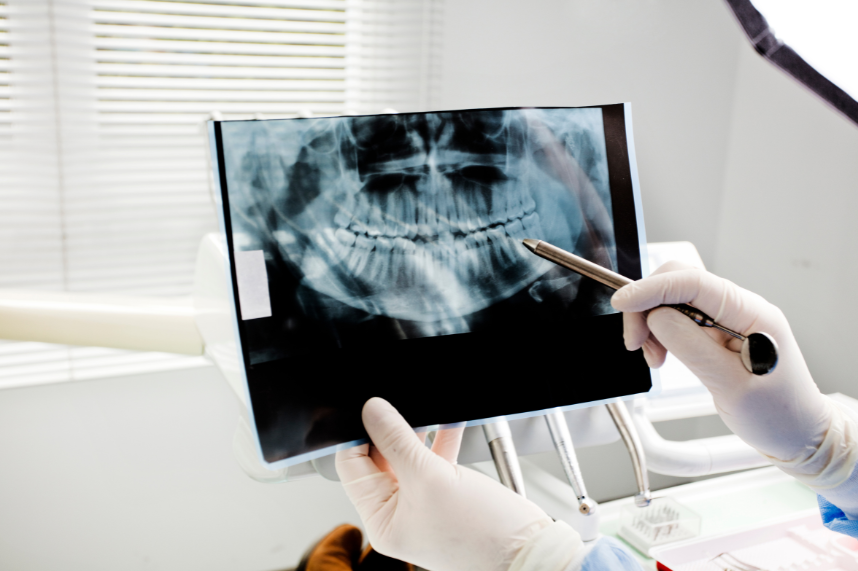
Few phrases prompt more apprehension in a dental office than the words “you may need surgery.” Yet, when you consider the range of procedures it includes—from tooth extractions and wisdom tooth removal to implants, gum grafting, bone grafting, and more—oral surgery is typically one of the most common categories of care delivered in dentistry.1 The overwhelming majority of oral surgery procedures are completed in a single outpatient visit with a recovery measured in hours or days, not weeks. Understanding what a procedure involves, which sedation options are available, and what the recovery period realistically looks like tends to reduce anxiety considerably.
This guide outlines the scope of surgical dental care, the sedation methods used to keep patients comfortable, and the practical details of preparation and healing.
What Is Oral and Maxillofacial Surgery
Oral and maxillofacial surgery is the dental specialty concerned with the diagnosis and surgical treatment of conditions affecting the mouth, teeth, jaws, and associated facial structures.2 The scope is wider than most patients often realize, and a general dentist performs a large share of these procedures in-office, often referring more complex cases to a specialist (Wells maintains both across our many locations).
Procedures commonly grouped under this heading include:
- Tooth extractions, including simple extractions and surgical removal of teeth that are fractured, decayed beyond restoration, or impacted
- Wisdom tooth removal, frequently recommended when third molars are impacted or lack sufficient space to erupt properly
- Dental implants, in which a titanium or zirconia post is surgically positioned in the jawbone to support a crown, bridge, or denture
- Bone grafting and sinus lifts, used to rebuild bone volume before implant placement
- Soft tissue procedures, such as frenectomies, gingival grafting, and biopsy of suspicious lesions
- Corrective jaw surgery, addressing skeletal discrepancies that affect chewing, speech, or breathing
- Treatment of infections, cysts, and traumatic injuries involving the teeth and jaws
The commonality is that each procedure involves incision, manipulation of bone or soft tissue, or both, which is why anesthesia and sedation planning is a central part of the process rather than an afterthought.
The Spectrum of Sedation Options
Patients often assume the choice is between being fully awake or fully unconscious. In practice, sedation exists on a continuum, and dental professionals select a level appropriate to the procedure, the patient’s medical status, and the patient’s tolerance for treatment.3 In North Carolina, dentists who administer moderate sedation or general anesthesia must hold the appropriate certification and permit issued by the North Carolina State Board of Dental Examiners, which requires documented training, equipment, and monitoring protocols.
Local Anesthesia
Local anesthesia is the foundation of nearly every surgical dental procedure, used alone or in combination with a sedative.
- Numbs a specific area through injection of an anesthetic agent near the target nerve
- The patient remains fully conscious and responsive throughout
- Onset is rapid, and the numb sensation typically resolves within a few hours
- Appropriate for simple extractions, small soft tissue procedures, and many single implant placements
Nitrous Oxide
Often called “laughing gas,” nitrous oxide is inhaled through a small nasal mask and produces a light, easily reversible level of relaxation.
- Takes effect within minutes and wears off almost as quickly once the gas is discontinued
- The patient remains awake, able to respond, and aware of the surroundings
- Most patients can drive themselves home afterward, making it convenient for shorter appointments
- Well suited for mild to moderate anxiety and for patients who prefer not to take oral medication
Oral Conscious Sedation
Oral sedation involves taking a prescribed medication, usually from the benzodiazepine family, before the appointment.
- Produces a deeper sense of calm than nitrous oxide, and many patients recall little of the procedure
- Requires a driver, since the effects persist for several hours
- Onset is slower, and the depth of sedation is less precisely controlled, than with intravenous methods
- Commonly used for longer restorative appointments and moderate surgical procedures
Intravenous (IV) Sedation
Delivered directly into the bloodstream, IV sedation allows the clinician to control the dose in real time.
- Produces moderate to deep sedation with a pronounced amnesic effect, so patients typically remember very little
- Depth can be adjusted throughout the appointment as conditions change
- Vital signs are monitored continuously, and a driver is required
- Frequently selected for surgical extraction of impacted wisdom teeth, multiple implant placements, and patients with significant dental anxiety
Wells Family Dental offers IV sedation at one of our locations: Brier Creek. Patients are in good hands with Dr. Chris Steddum, who earned his IV sedation permit through The Aristotle Institute and actively maintains his credentials with the American Dental Society of Anesthesiology. (Note that we offer all other forms of sedation at Briar Creek and at each of our other locations.)
Preparing for the Procedure
Preparation for oral surgery varies with the sedation plan, but a few principles apply broadly:
- Follow fasting instructions precisely for IV sedation or general anesthesia—typically no food or drink for six to eight hours beforehand
- Arrange transportation in advance for any sedation beyond local anesthesia or nitrous oxide
- Fill prescriptions for antibiotics or analgesics before the appointment
- Wear comfortable clothing with sleeves that can be pushed above the elbow
- Stock the kitchen ahead of time, since shopping after a procedure can be difficult or unpleasant
- Plan for a full day of rest, and for two to three days of reduced activity following more involved surgery
Recovery: Diet, Hygiene, and Realistic Expectations
The first 24 hours set the tone for the entire oral surgery healing process. A blood clot forms at the surgical site and serves as the scaffold for tissue regeneration. Disrupting that clot, whether through suction, vigorous rinsing, or smoking, can lead to a painful complication known as dry socket.4
Diet deserves particular attention as well. Choosing appropriate soft food for after oral surgery protects the surgical site while maintaining adequate nutrition and hydration, both of which support healing. Nutrient density matters more than volume during the first several days.
Reliable soft foods for after oral surgery include:
- Broths and puréed soups served warm (not hot)
- Greek yogurt, cottage cheese, and smoothies consumed with a spoon (not a straw)
- Scrambled eggs, which supply protein without requiring much chewing
- Mashed potatoes, polenta, and well-cooked oatmeal
- Applesauce, mashed bananas, and puréed fruit
- Refried beans, hummus, and soft tofu
Foods to stay away from include nuts, seeds, chips, popcorn, crusty bread, and anything spicy or acidic. Alcohol and carbonated beverages should be avoided while healing is underway, and straws are off the table entirely during the first week because the suction can dislodge the clot.
Additional recovery guidance:
- Apply cold compresses in 20-minute intervals during the first day to limit swelling, then switch to gentle warmth afterward
- Keep the head elevated, including while sleeping, for the first two nights
- Resume gentle brushing of the remaining teeth the following day while avoiding the surgical site
- Rinse with warm salt water beginning 24 hours after surgery, allowing the solution to fall from the mouth rather than spitting forcefully
- Take prescribed medications on schedule rather than waiting for discomfort to escalate
- Contact the practice promptly if bleeding persists beyond several hours, if swelling worsens after the third day, or if fever develops
Note that all oral surgeries are unique. Your dentist may give you different advice than the general recommendations above.
Choosing a Practice for Surgical Care
 Patients searching for “oral surgery near me” are generally weighing convenience against expertise, and both deserve consideration. A few criteria are worth evaluating:
- Whether the practice performs the specific procedure in-house or refers to a specialist, and what that referral relationship looks like
- Which sedation options are offered, including training and credentials to support them
- The availability of three-dimensional imaging, which improves planning accuracy for implants and impacted teeth
- After-hours contact procedures for post-operative concerns
- How clearly the practice explains costs, insurance coordination, and financing before treatment begins
Among dental offices in Raleigh, NC, capabilities vary considerably, so it is reasonable to ask direct questions during a consultation. A dentist in Raleigh, NC, who performs a high volume of extractions and implant placements will often be able to complete treatment without an outside referral, which simplifies scheduling and keeps records consolidated.
A Measured Approach to Surgical Care
Surgical dental treatment is rarely as difficult as patients anticipate, particularly when expectations are set clearly beforehand. The combination of modern imaging, well-established sedation protocols, and straightforward post-operative guidance makes most procedures predictable.
Wells Family Dental provides comprehensive care to families throughout the Triangle, including surgical services delivered with the sedation option best suited to each patient. Patients looking for dentists in Raleigh, NC, that offer a range of options are welcome to schedule a consultation to review imaging, discuss sedation, and receive a clear treatment estimate before committing to anything. Our aim is to make the surgical experience as uneventful as possible.
Frequently Asked Questions
What is the most common oral surgery?
Tooth extraction is the most frequently performed surgical dental procedure, and removal of impacted third molars—commonly called wisdom teeth—accounts for a significant share of those cases. Most extractions are completed in a single visit lasting about an hour.
How long does it take for oral surgery to heal?
Healing speed depends entirely on the invasiveness of the procedure. A simple extraction often feels comfortable within three to five days, whereas surgical removal of impacted wisdom teeth or implant placement typically involves seven to ten days of recovery before normal function returns. Individual healing is also influenced by age, whether you smoke or vape, systemic health, and adherence to post-operative instructions.
How do you feel after oral surgery?
Immediately afterward, patients who received sedation often feel groggy, and numbness from local anesthesia persists for several hours. Swelling generally peaks around the second or third day and then subsides. Mild to moderate soreness, some jaw stiffness, and minor bruising are all within the expected range. Most patients describe the discomfort as manageable with prescribed or over-the-counter analgesics, and many return to desk work within one to two days.
Will I be asleep during the procedure?
Not necessarily. Many procedures are completed with local anesthesia alone or with nitrous oxide, during which patients remain awake and comfortable. Deeper sedation is available when the procedure or the patient’s anxiety level warrants it, and full unconsciousness is reserved for general anesthesia cases.
Is oral surgery covered by dental insurance?
Coverage depends on the plan and the medical necessity of the procedure. Extractions and certain surgical services are frequently covered in part, while implants may fall under a separate benefit category or an annual maximum. A pre-treatment estimate submitted to the carrier provides the clearest picture before treatment begins.
When can I return to exercise?
Light walking is acceptable within a day or two, but strenuous exercise should generally wait five to seven days after a surgical procedure. Elevated blood pressure and heart rate can promote bleeding and disturb the healing site.
References
- “OMS Procedures,” American Association of Oral and Maxillofacial Surgeons, retrieved on August 14, 2026, from: https://aaoms.org/education-meetings/academics/become-an-oms/oms-procedures/.
- “Oral Maxillofacial Surgeons: What They Do and Why You Should Choose a Board-Certified Doctor,” American Board of Oral and Maxillofacial Surgery, retrieved on August 14, 2026, from: https://www.aboms.org/news/what-oral-maxillofacial-surgeons-do-and-why-choose-board-certified.
- “Sedation Dentistry,” Cleveland Clinic, August 2025, https://my.clevelandclinic.org/health/treatments/22275-sedation-dentistry.
- Mayo Clinic Staff, “Dry Socket,” Mayo Clinic, July 2023, https://www.mayoclinic.org/diseases-conditions/dry-socket/symptoms-causes/syc-20354376.

Dr. Brett Wells is the founder of Loren Dental, DentalHQ.com, and Wells Family Dental Group, which was recently awarded the Triangle Business Journal’s “2024 Best Places to Work” recognition. Dr. Wells has more than 20 years of experience practicing general and family dentistry, and has published widely in major medical journals, like Dental Economics and Inside Dentistry, on topics ranging from navigating dental insurance to advice for other dental practices and the impact of PPOs on dentistry. He is a graduate of the University of North Carolina-Chapel Hill Adams School of Dentistry and maintains memberships in various professional associations, including the American Dental Association, the Academy of General Dentistry, and the Dentist Entrepreneur Organization.
